Dollar-Won Rate Hits 1,540s as Foreigners Sell ₩7.7 Trillion in Korean Stocks
The dollar-won rate rose to the 1,540s on the 29th, the highest level since the global financial crisis. Foreign investors sold about ₩7.7 trillion of domestic shares, adding pressure on the won. The weaker currency could raise import prices, energy costs and foreign-debt burdens. The next move depends on whether foreign selling persists.
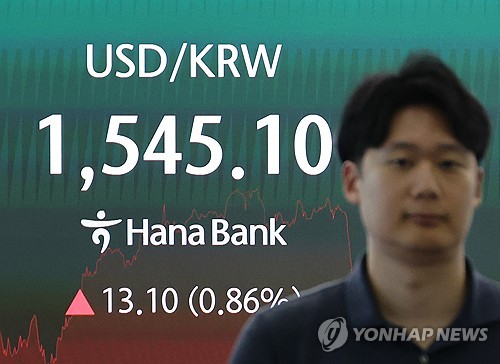
The dollar-won exchange rate moved into the 1,540 won range on the 29th, marking its highest level since the global financial crisis. The immediate driver was heavy foreign selling in the Korean stock market. Foreign investors sold about ₩7.7 trillion of local shares, increasing concern that proceeds could be converted into dollars and adding pressure to the won.
Foreign Selling and FX Pressure
When foreign investors sell Korean shares, the market quickly prices in potential dollar demand. At 1,540 won per dollar, ₩7.7 trillion equals roughly $5 billion on a simple conversion basis, although the actual timing and size of conversion can vary. The move matters because equity weakness and currency weakness can reinforce each other: concern over FX losses may encourage more selling of won assets.
Impact on Korea
A 1,540 won rate raises the local-currency cost of dollar-priced energy, raw materials and imported goods. For Korean companies, the pressure shows up in fuel, metals, chemicals, food inputs and dollar debt servicing. Exporters may gain some translation benefits, but those gains can be offset when imported components are expensive. For households, travel, overseas tuition and online purchases become costlier.
Outlook
The exchange rate will likely be shaped by continued foreign stock selling, global dollar strength, commodity prices and domestic market-stability monitoring. If selling persists, volatility in the 1,500 won range could continue. Companies need to review hedge ratios and foreign-currency maturities, while individuals are better served by staged currency conversion than by chasing a spike.
Key points
- The dollar-won rate rose to the 1,540s on the 29th, the highest level since the global financial crisis. Foreign investors sold about ₩7.7 trillion of domestic shares, adding pressure on the won. The weaker currency could raise import prices, energy costs and foreign-debt burdens. The next move depends on whether foreign selling persists.
- Use the body and FAQ context before acting on this update.
- Compare with related issues inside the category hub.
FAQ
Why did the dollar-won rate rise to the 1,540s?
Foreign investors sold about ₩7.7 trillion of Korean stocks, increasing concern over won weakness and potential dollar demand.
How much is ₩7.7 trillion in dollars?
At 1,540 won per dollar, it is roughly $5 billion on a simple conversion basis, though actual FX conversion may differ.
How does a 1,540 won exchange rate affect households?
It can raise the won cost of travel, overseas tuition, online imports and dollar-linked payments.
Latest stories

Gold selloff persists as dollar and real rates test rebound hopes in Korea
Gold remains under pressure as the dollar and real yields lift the opportunity cost of holding a non-yielding asset. A relief rebound needs more than oversold charts: dollar softness, stable Treasury yields and renewed futures or ETF demand must appear together. Korean investors should track won-denominated gold, USD/KRW, spreads, taxes and withdrawal costs
Won-Dollar Rate Stays High as Korea Weighs FX Concentration System
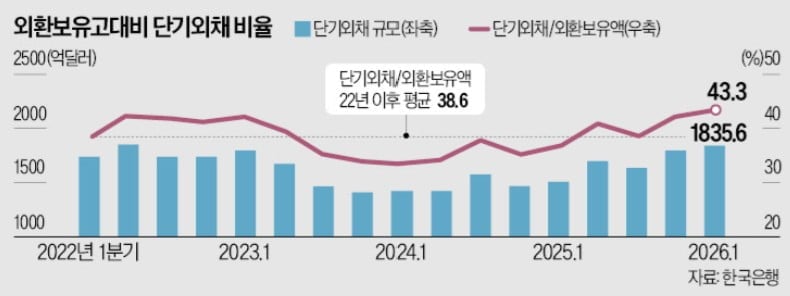
The won-dollar exchange rate has become a key macro risk for Korea because it affects inflation, corporate costs and foreign investment at once. A move from 1,300 won to 1,400 won per dollar adds 100 million won to every 1 million dollar payment. An FX concentration system could help track and allocate dollar liquidity in a crisis. Its design must remain lim
Won-Dollar Rate Stays Near 1,500 as SK Hynix ADR and 24-Hour Trading Reshape FX Market
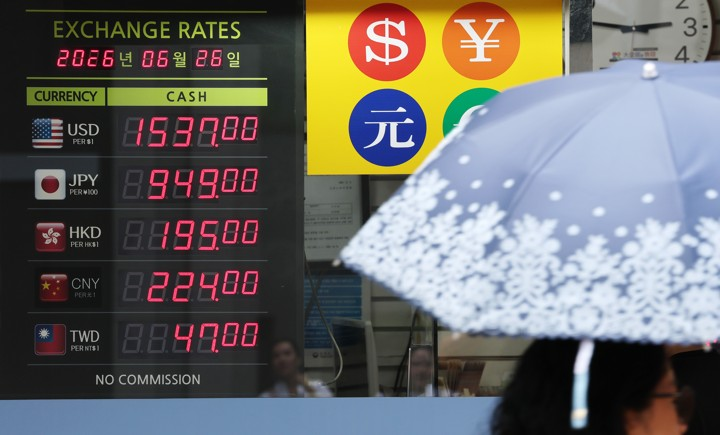
The won-dollar rate near 1,500 is becoming more than a temporary shock. A 29-session failure to return to the 1,400 range has raised pressure on import costs and foreign investor flows. SK Hynix ADR listing and wider 24-hour trading add a new pricing channel for Korean assets.
Donghae New Port Coal Pier Starts, Strengthening Raw Material Supply
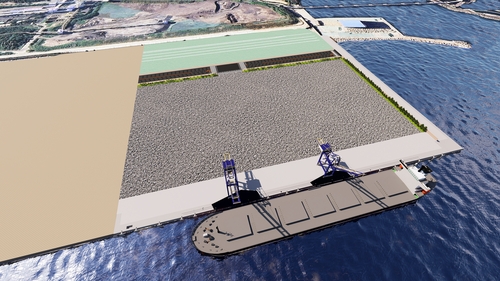
The coal pier at Donghae New Port is a logistics project for core industrial raw materials. Its main demand base is the cement manufacturing and power generation sectors in the Donghae region. The project is expected to improve supply predictability from unloading to inland transport.

Gold XAU/USD Wave IV Correction Nears Late Stage as Rebound Test Builds
Gold XAU/USD is moving through the late phase of an Elliott Wave IV correction. The structure points to consolidation after the strong Wave III advance, not a confirmed trend reversal. A defense of support and a break of short-term resistance will decide whether Wave V can develop.
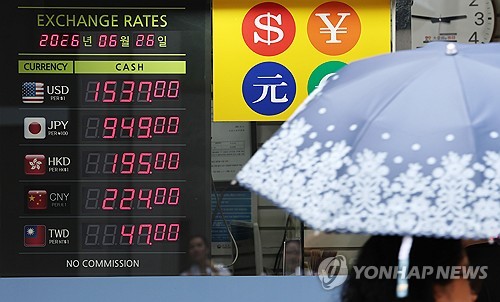
USD/KRW Rate Averaged Above 1,500 in Q2, First Since FX Crisis
The won-dollar exchange rate moved above 1,500 won per dollar on a second-quarter average, the first such quarter since the Asian financial crisis. It has failed to return to the 1,400 range for 29 straight trading days. Importers, travelers, students abroad and companies with dollar liabilities now face heavier won-denominated costs.

Korea Construction Output Falls for 24th Month, Surpassing Past Crisis Slumps
Construction production in South Korea has declined year on year for 24 consecutive months. The downturn has now lasted longer than the slumps seen during the Asian financial crisis and the global financial crisis. High financing costs, weak property demand and pressure in project financing are delaying recovery. The weakness may weigh on domestic demand, jo

Gold Tests $4,000 Support as Fed Rate Bets Outweigh Geopolitical Risk
Gold is now trading more on the Federal Reserve rate path than on geopolitical stress. Front-month New York gold futures ended June 26 at $4,078.70, down 3.44% for the week. The $4,000 area is the immediate support zone, while Korean investors also face won-dollar exchange-rate and product-tax variables.