USD/KRW closes at 1,537.0 won, up 10.0 as Korean won weakens
USD/KRW ended at 1,537.0 won at the 15:30 close, up 10.0 won from the previous session. The higher dollar price signals renewed weakness in the Korean won. Import payments, remittances and new dollar investments now face a higher conversion cost.
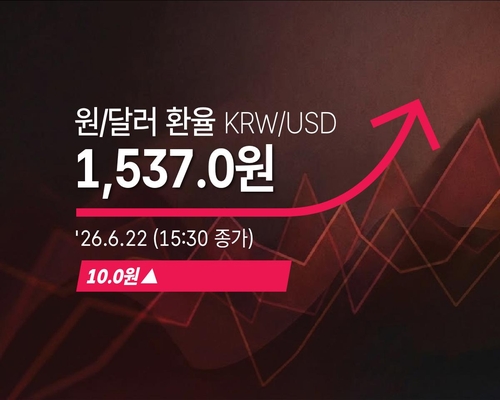
USD/KRW closed at 1,537.0 won, putting fresh pressure on the Korean won. At the 15:30 close in Seoul, the exchange rate was 10.0 won higher than the previous session. The move means buyers needed 10 more won for every U.S. dollar, a direct sign of won depreciation.
Heavier cost at the 1,530 won level
The close keeps the exchange rate in the upper 1,500 won range, a level that matters for companies and households. A simple purchase of $10,000 now requires 15.37 million won before bank spreads and fees. Compared with the previous close, the same amount costs 100,000 won more. For a $1 million import payment, the extra burden from the 10 won rise reaches 10 million won.
Impact on Korean markets
A stronger dollar raises the won-denominated price of crude oil, gas, raw materials, food and components settled in dollars. Import-heavy companies face margin pressure, while consumers may see higher costs in travel, study abroad, overseas shopping and dollar investment. Investors already holding dollar assets may see larger won-based valuations. The next session will focus on dollar supply and demand, exporter selling, foreign capital flows and whether USD/KRW stabilizes around the 1,530 won range.
Key points
- USD/KRW ended at 1,537.0 won at the 15:30 close, up 10.0 won from the previous session. The higher dollar price signals renewed weakness in the Korean won. Import payments, remittances and new dollar investments now face a higher conversion cost.
- Use the body and FAQ context before acting on this update.
- Compare with related issues inside the category hub.
FAQ
What was the USD/KRW closing rate?
USD/KRW closed at 1,537.0 won at 15:30, up 10.0 won from the previous session.
What does a 10 won rise mean?
It means buying one U.S. dollar required 10 more Korean won, indicating a weaker won and higher dollar conversion costs.
Who is affected by the higher exchange rate?
Importers, travelers, students abroad, overseas shoppers and investors buying dollar assets face higher won-based costs.
Latest stories

Oil Prices Fall 30%, but Korean Fuel Costs Stay High as Pump Relief Lags
Global oil prices fell 30% over the past month after the U.S.-Iran ceasefire agreement, but Korean pump prices have not moved down at the same pace. The delay comes from import timing, the won-dollar exchange rate, fuel taxes, inventories and retail pricing. If lower crude prices persist, domestic fuel prices are likely to ease gradually, but not by the full

Won-Dollar Rate Trapped in 1,500 Won Range as Bonds Turn Cautious
The won-dollar rate is holding inside the 1,500 won range as dollar buyers and sellers reach a temporary balance. The bond market is tracking the rate path and foreign flows rather than chasing a one-way trade. At 1,500 won per dollar, a USD 10,000 payment converts into the 15 million won range, raising costs for importers, students and global investors. Hed